More than 2,200 years after China’s Terracotta Army was created, ancient fingerprints are revealing the forgotten people behind an emperor’s extraordinary ambition.
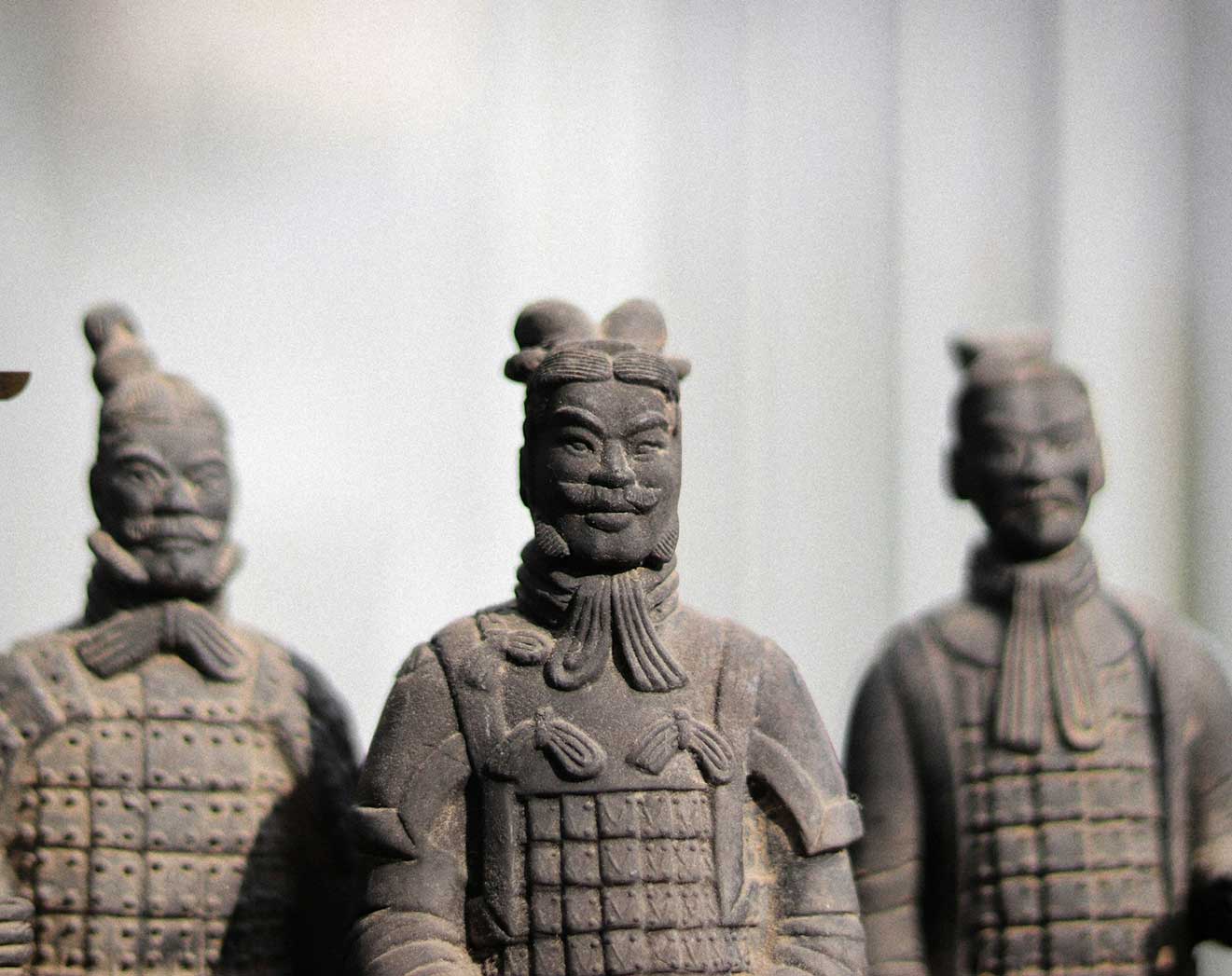
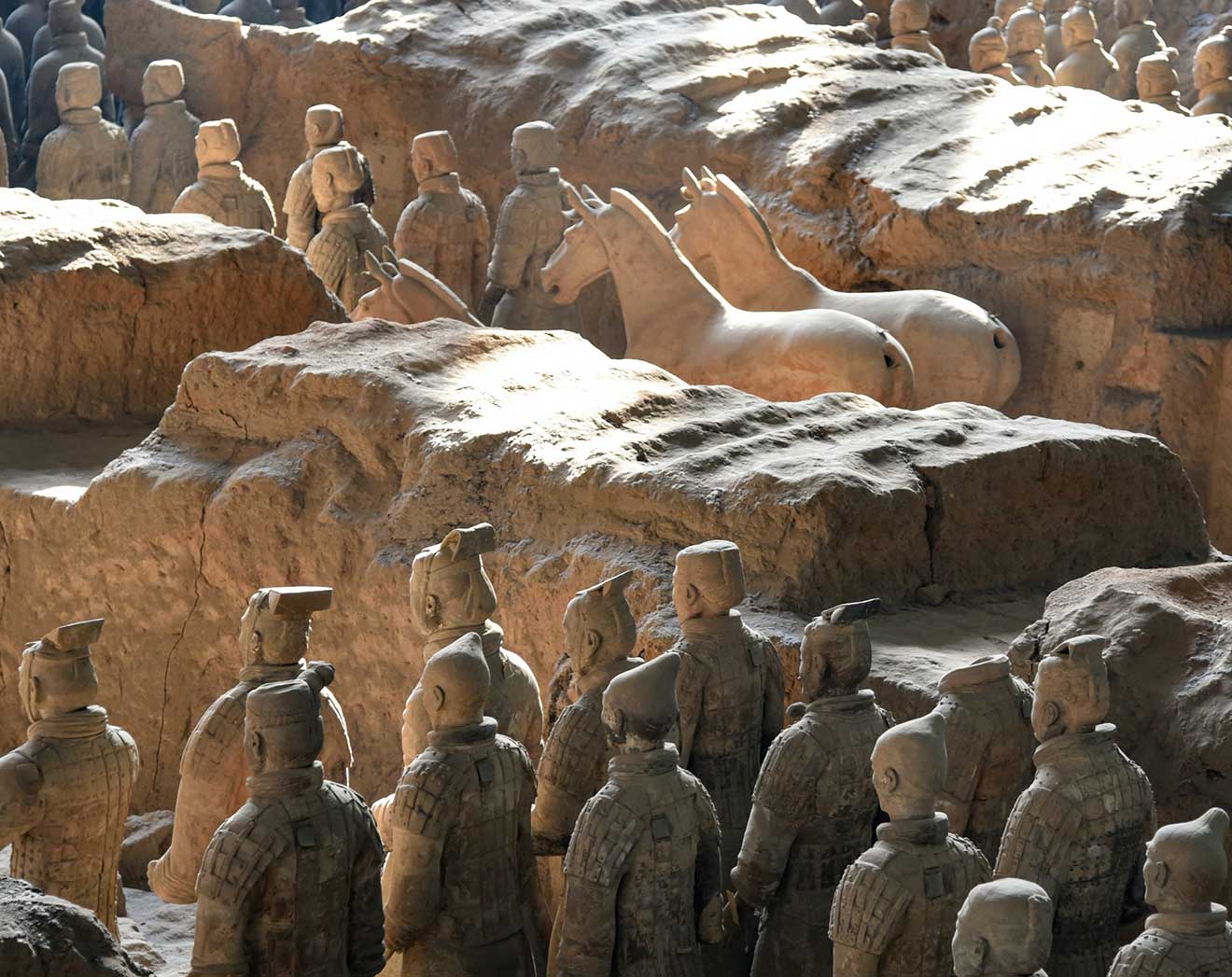
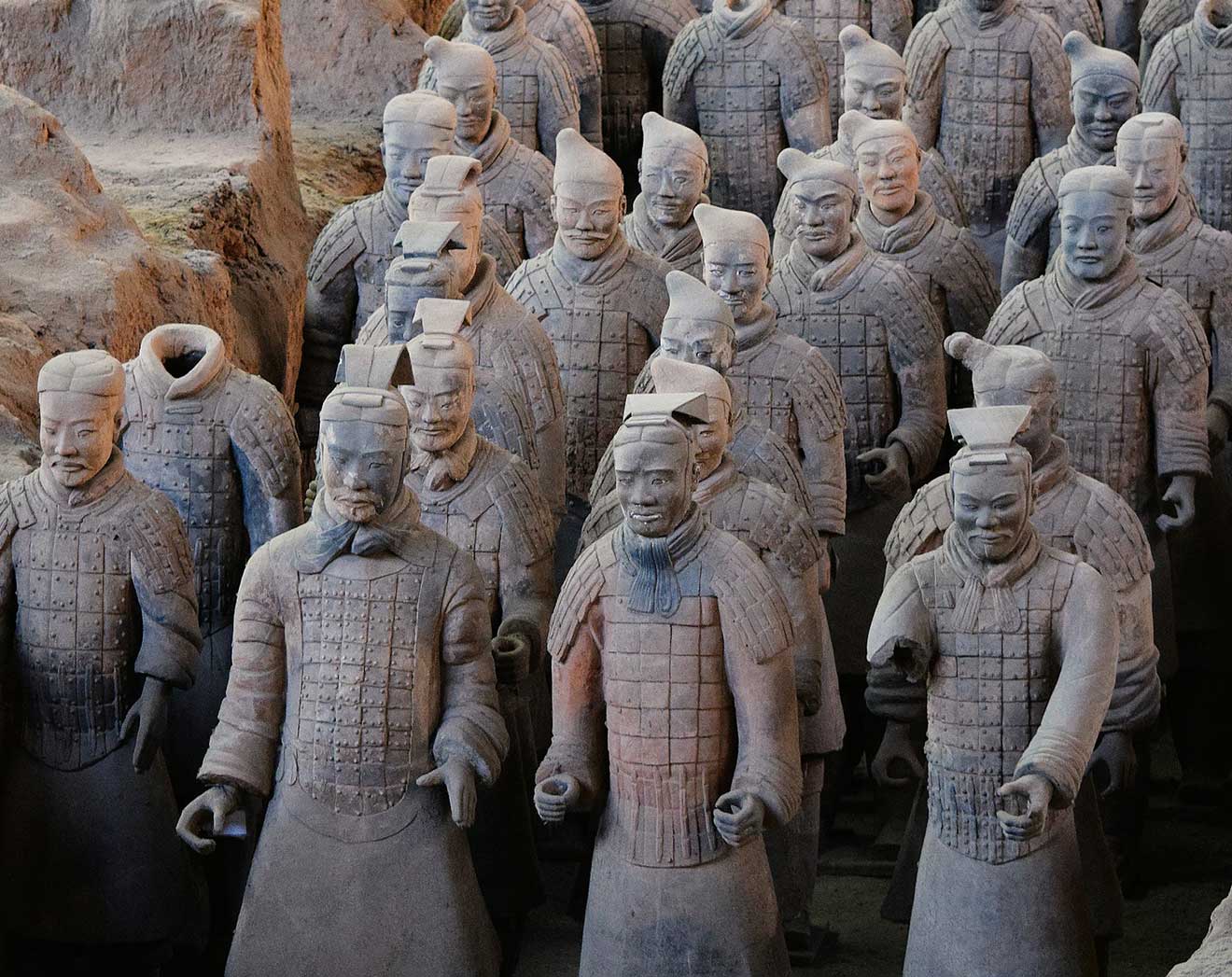
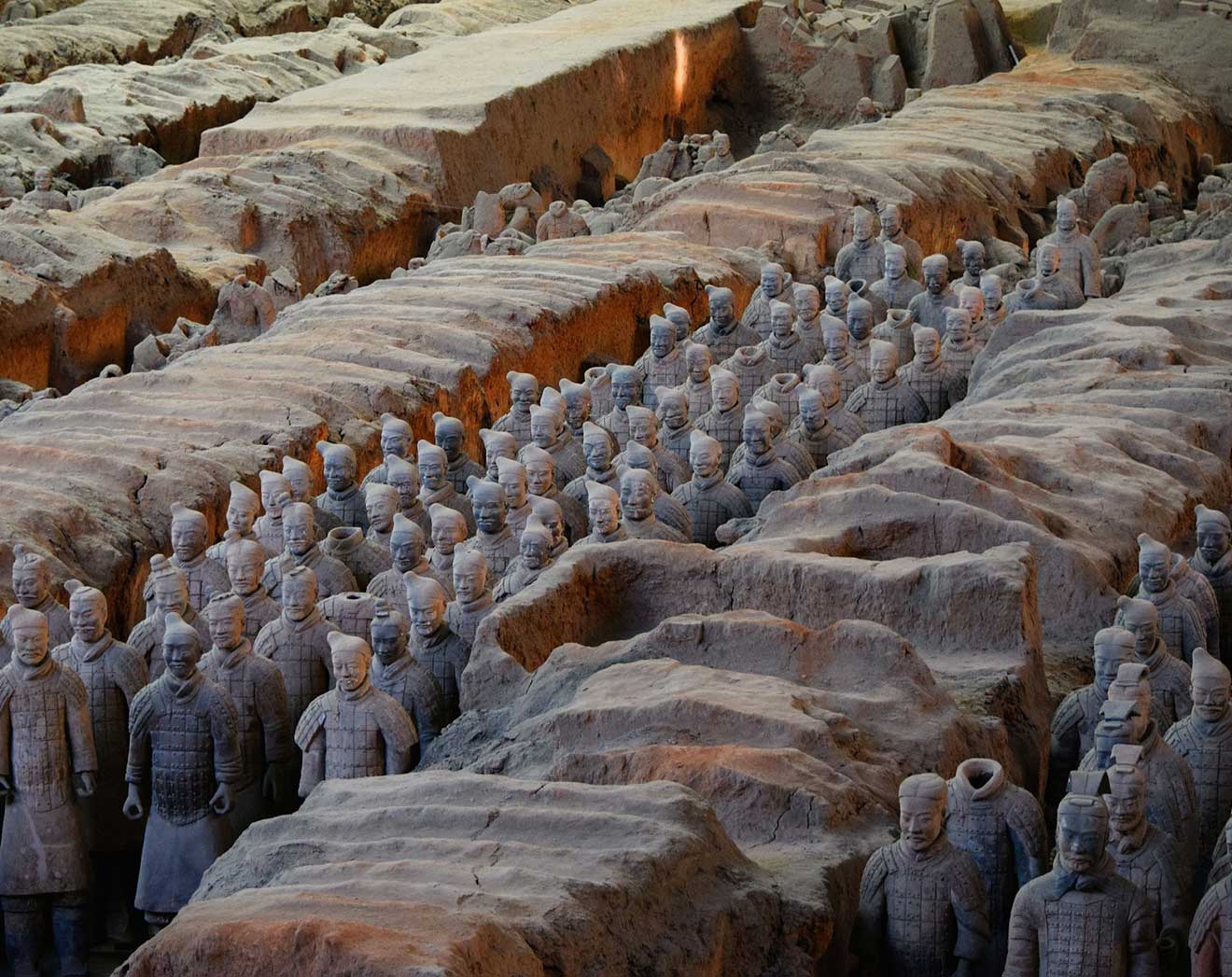
Beneath the enormous exhibition hall near Xi’an, thousands of clay soldiers stand in silent formation. Their faces emerge from the reddish earth, each carrying a different expression. Some wear elaborate armour. Others stand in simpler military dress. Their hairstyles, postures and features distinguish one warrior from another.
Beyond the excavated ranks, broken figures and exposed trenches interrupt the formation. The archaeological site remains a work in progress, its discoveries unfolding beneath the same roof that welcomes visitors from around the world.
This is China’s **Terracotta Army**, created more than 2,200 years ago to accompany Qin Shi Huang, China’s first emperor, into the afterlife.
For decades, the extraordinary scale of the army has dominated its story. Archaeologists estimate that the burial pits contain approximately 8,000 warriors and horses. Their discovery in 1974 transformed a quiet agricultural landscape into one of the world’s most remarkable archaeological destinations.
Yet among the thousands of soldiers, another story has remained almost invisible.
It lies not in the faces of the warriors, but in the clay itself.
Researchers have identified ancient fingerprints that may reveal something remarkable about the people who created this imperial army.
And the evidence suggests that those hands did not belong exclusively to adult men.
For travellers visiting Xi’an, the discovery introduces another dimension to one of China’s most celebrated archaeological sites. Behind the imperial ambition stands the possibility of a much broader human story.
The Fingerprints
More than two millennia ago, someone pressed a finger against damp clay.
Perhaps the worker was attaching an arm, shaping a piece of armour or adjusting a warrior’s head. The precise action remains unknown, but the pressure left an impression.
The clay dried. The figure entered the kiln. Eventually, the completed soldier disappeared beneath the earth.
The fingerprint survived.
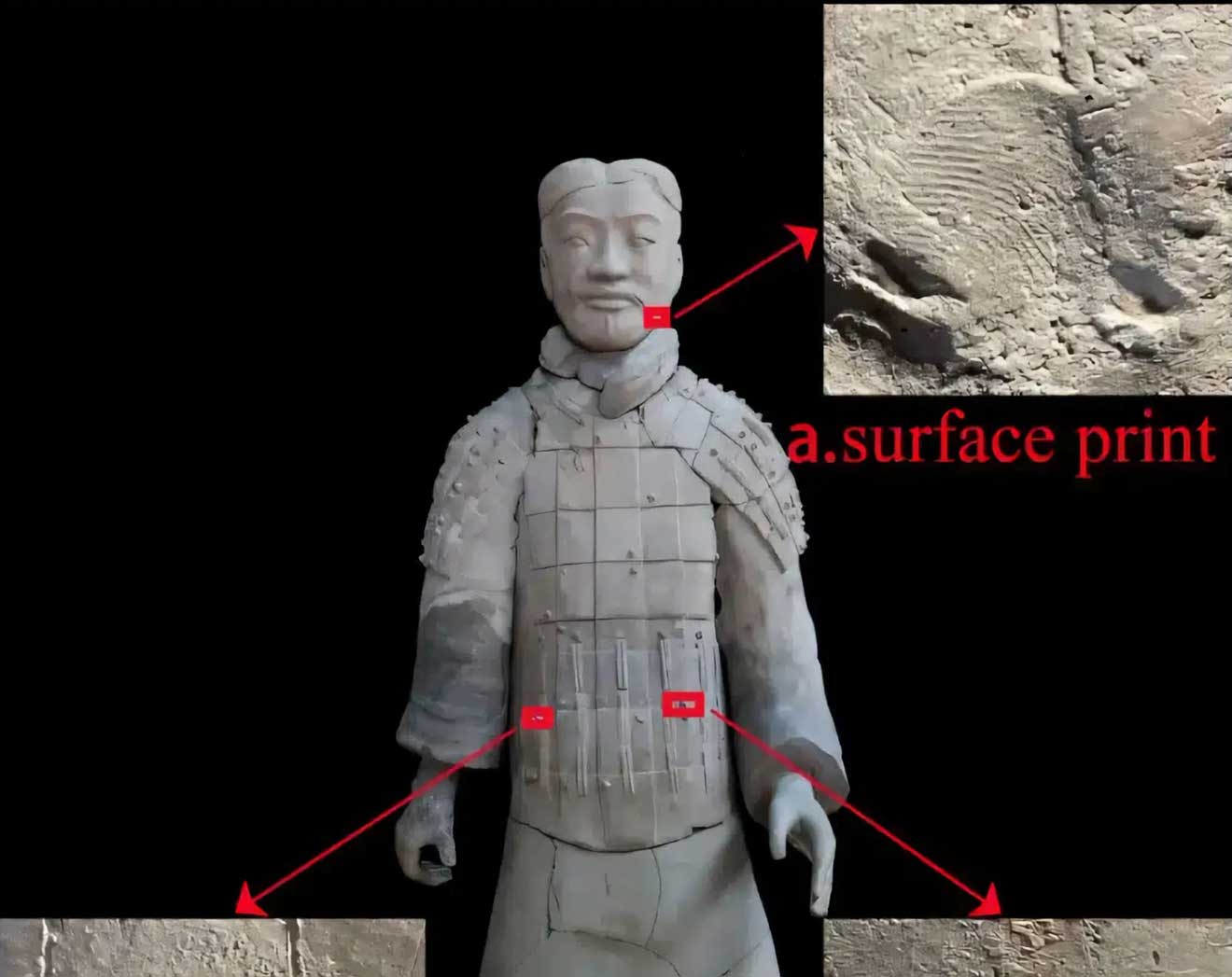
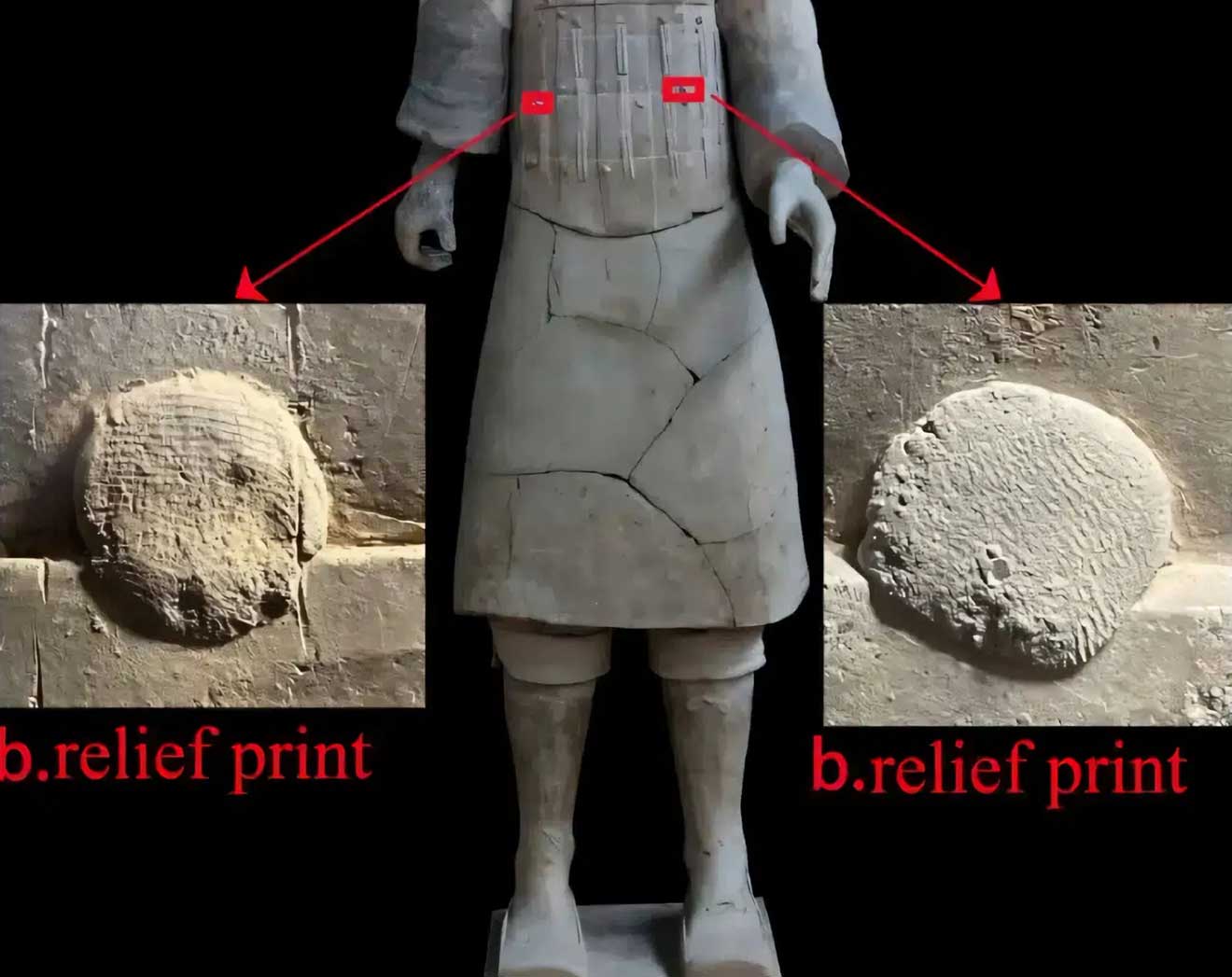
In 2026, researchers published a study examining 79 preserved fingerprints found on 36 Terracotta Warriors. The impressions came from a specific excavation area within Pit 1 of Emperor Qin Shi Huang’s mausoleum.
Their investigation offered a new way to examine the people behind the enormous imperial project.
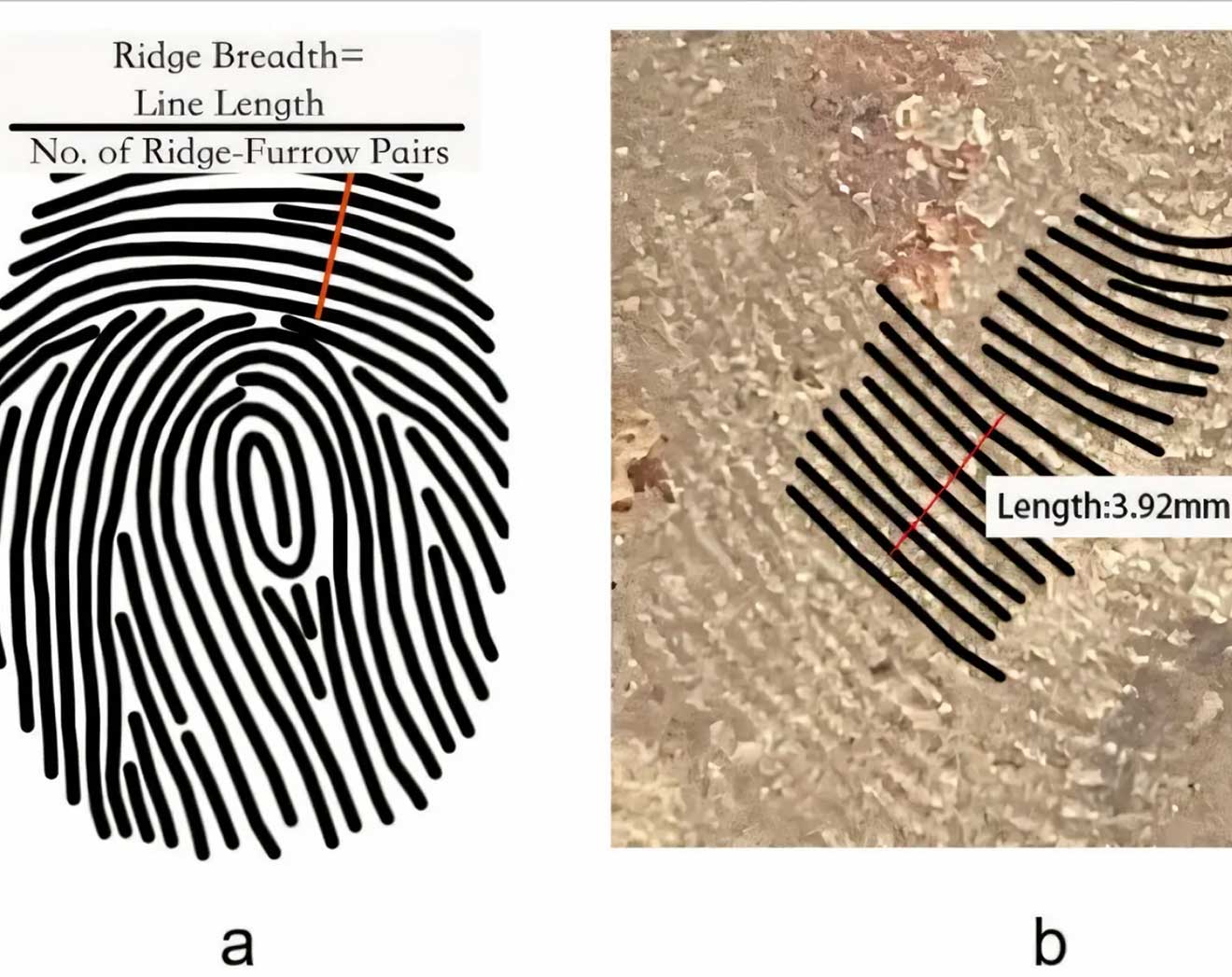
Rather than studying the soldiers’ faces, weapons or military formation, the researchers measured the tiny ridges left by human fingers.
These ridges carry information about the physical characteristics of the people who made the impressions.
Using statistical analysis, the researchers found fingerprint patterns consistent with the participation of adult women and younger workers.
The findings invite a closer examination of who participated in the imperial workshops.
They also introduce a human dimension that the soldiers’ military formation alone cannot reveal.
Read More: China: Weifang Kite Festival
…The emperor left an army to preserve his presence in eternity. Its makers left their fingerprints.
What the Clay Reveals
The research team used a Bayesian statistical model to examine the spacing between fingerprint ridges.
Because ridge measurements vary across age and sex groups, the model can estimate the demographic composition represented by a collection of impressions. These estimates rely on comparisons with modern reference populations, whose characteristics may differ from those of Qin-era China.
The results suggested that approximately 45% of the sampled fingerprints came from adult men, 33% from adult women and 22% from juveniles under 15.
These percentages describe statistical estimates for the fingerprints, not the proportion of individual workers who built the army.
One person could have left several impressions. Experienced craftspeople might also have removed their fingerprints more carefully than apprentices.
The sample came from one limited excavation area, making broader conclusions about the entire workforce premature.
Nevertheless, the findings provide an important new line of evidence.
The researchers also examined the results against surviving Qin-era records. Historical documents and archaeological discoveries indicate that women and younger people participated in certain forms of state-supervised production.
The fingerprints therefore offer more than an isolated scientific curiosity.
They connect the physical remains of the Terracotta Army with a wider history of labour, craftsmanship and imperial construction.
For the first time, the people behind the soldiers begin to emerge through marks left by their own hands.
The People Who Built an Emperor’s Eternity
Qin Shi Huang became ruler of a unified China in 221 BCE. His reign established a powerful imperial system, bringing territories under central authority and introducing common standards across the empire.
His burial complex reflected the extraordinary ambitions of that new political order.
Construction began in 246 BCE, when the future emperor was still a young king. Over the following decades, an enormous workforce created a subterranean world intended to accompany him after death.
The Terracotta Army formed only part of this undertaking.
Archaeologists have discovered bronze weapons, chariots, horses and other objects associated with the emperor’s imagined afterlife.
The clay soldiers themselves demonstrate sophisticated craftsmanship.
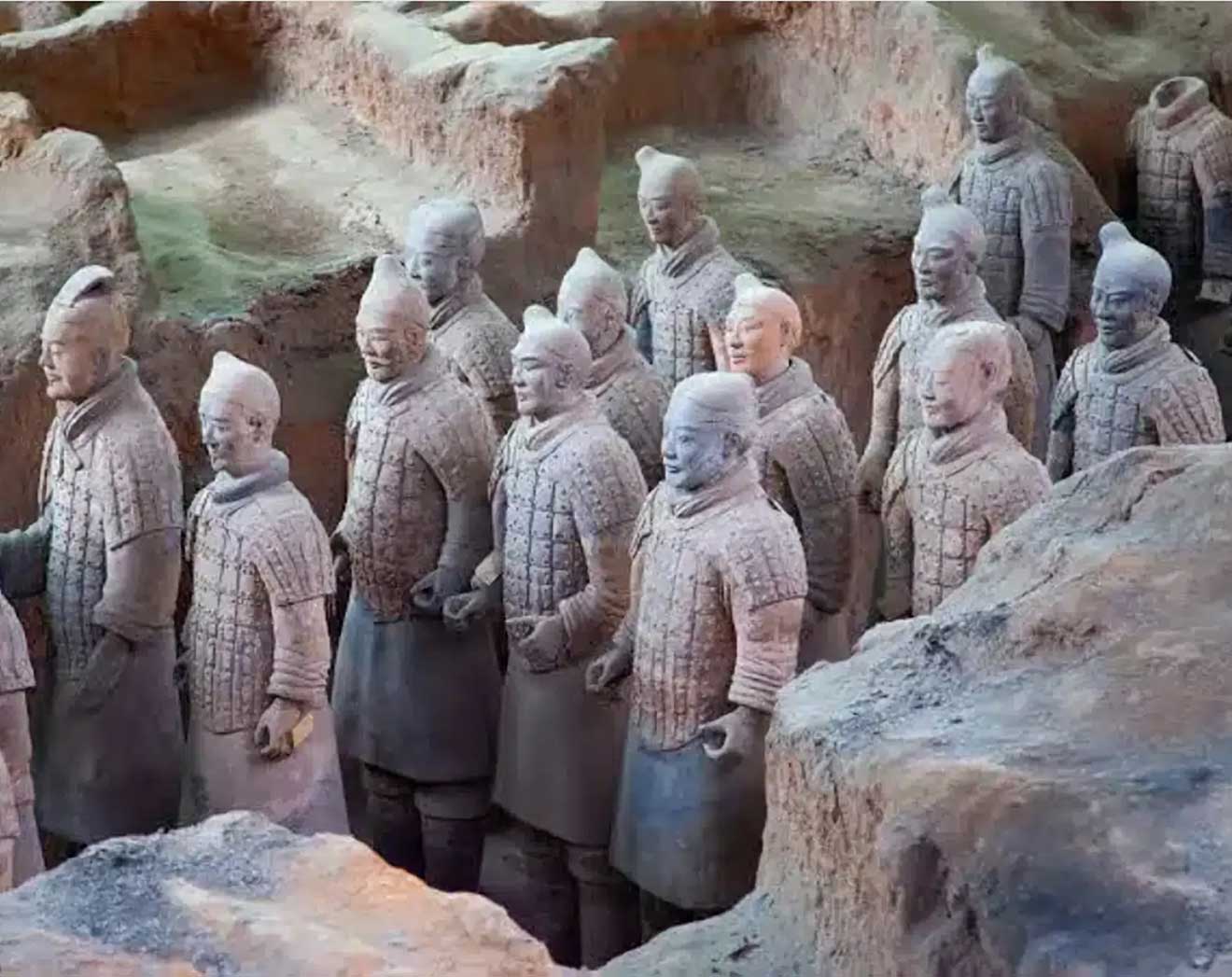
Workers manufactured different components separately, including heads, arms, legs and torsos. They assembled these elements into complete figures and added individual details.
This production method allowed workshops to create thousands of soldiers while preserving differences between them.
The new fingerprint research adds another question to this extraordinary achievement.
Who performed the work?
Historical evidence points towards a complex imperial labour system involving skilled artisans, apprentices and people working under different legal conditions.
Some may have possessed considerable expertise. Others may have learned their skills while participating in the project. The precise circumstances of the individuals who left the studied fingerprints remain unknown.
What the evidence increasingly suggests, however, is that the creation of the army involved a more varied community than earlier assumptions allowed.
The emperor’s soldiers represented military power.
Their construction required thousands of ordinary human actions.
…Behind the monumental soldiers stands another history, written not in stone, but in the impressions of human hands.
Xi’an: Where History Continues to Emerge
The surrounding landscape holds the remains of one of the ancient world’s most ambitious burial complexes.
Xi’an itself carries centuries of Chinese history. Known as Chang’an during several later dynasties, the city became an imperial capital closely associated with the Silk Road.
For travellers, Xi’an provides the historical setting for understanding the emperor’s mausoleum and the civilisation that produced it.
Yet the Terracotta Army offers something different from a conventional monument.
Visitors enter an archaeological landscape where excavation and conservation continue.
In Pit 1, long rows of soldiers occupy the exposed earth. Some figures stand almost complete. Others remain fragmented, awaiting further examination or restoration.
The contrast is striking.
One section reveals the emperor’s intended military formation. Another exposes the painstaking work required to recover it.
The soldiers have survived more than twenty centuries underground, but their modern story began only in 1974.
Every new investigation adds another layer to what archaeologists understand about their construction.
The fingerprint research belongs to this continuing process.
It connects the visible work of excavation with the less visible history of the people who originally shaped the soldiers.
A Different Perspective of the Terracotta Army
Most visitors arrive at the Terracotta Army expecting to encounter the power of ancient China.
The enormous formations deliver precisely that impression.
Thousands of soldiers face forward, their ranks extending across the excavated pits. Their individual expressions create an almost unsettling sense of human presence.
Yet the latest research invites travellers to look beyond the emperor’s military ambitions.
Consider the details.
The folds of a clay robe. The carefully shaped armour. The individual features of a warrior’s face.
Each required human labour.
Somewhere within that process, a worker pressed a finger into wet clay and left a mark that survived for more than two thousand years.
It may have belonged to an experienced artisan, a woman working in an imperial workshop or a young apprentice learning a craft.
The research cannot identify that person.
…Xi’an’s Terracotta Army reveals more than imperial power. Its clay preserves traces of the people who built it.
But it has begun to reveal the diversity of the community responsible for creating the soldiers.
That distinction matters.
The Terracotta Army has always demonstrated the extraordinary resources commanded by China’s first emperor. Now, its clay also offers evidence of the people who transformed those resources into something enduring.
When travellers stand before the warriors in Xi’an, they can still see the immense ambition of Qin Shi Huang.
But among the thousands of carefully shaped faces, they may begin to imagine something else.
Not another emperor or general, but an unknown craftsperson working with damp clay, unaware that a small impression from their hand would survive for 2,200 years.
The emperor left an army to preserve his presence in eternity.
Its makers left their fingerprints.
Read More: My Notes Across the Great Wall of China
Think your friends would be interested? Like, share and subscribe!