Two-day journey among the limestone dreams of Vietnam’s most secret province.
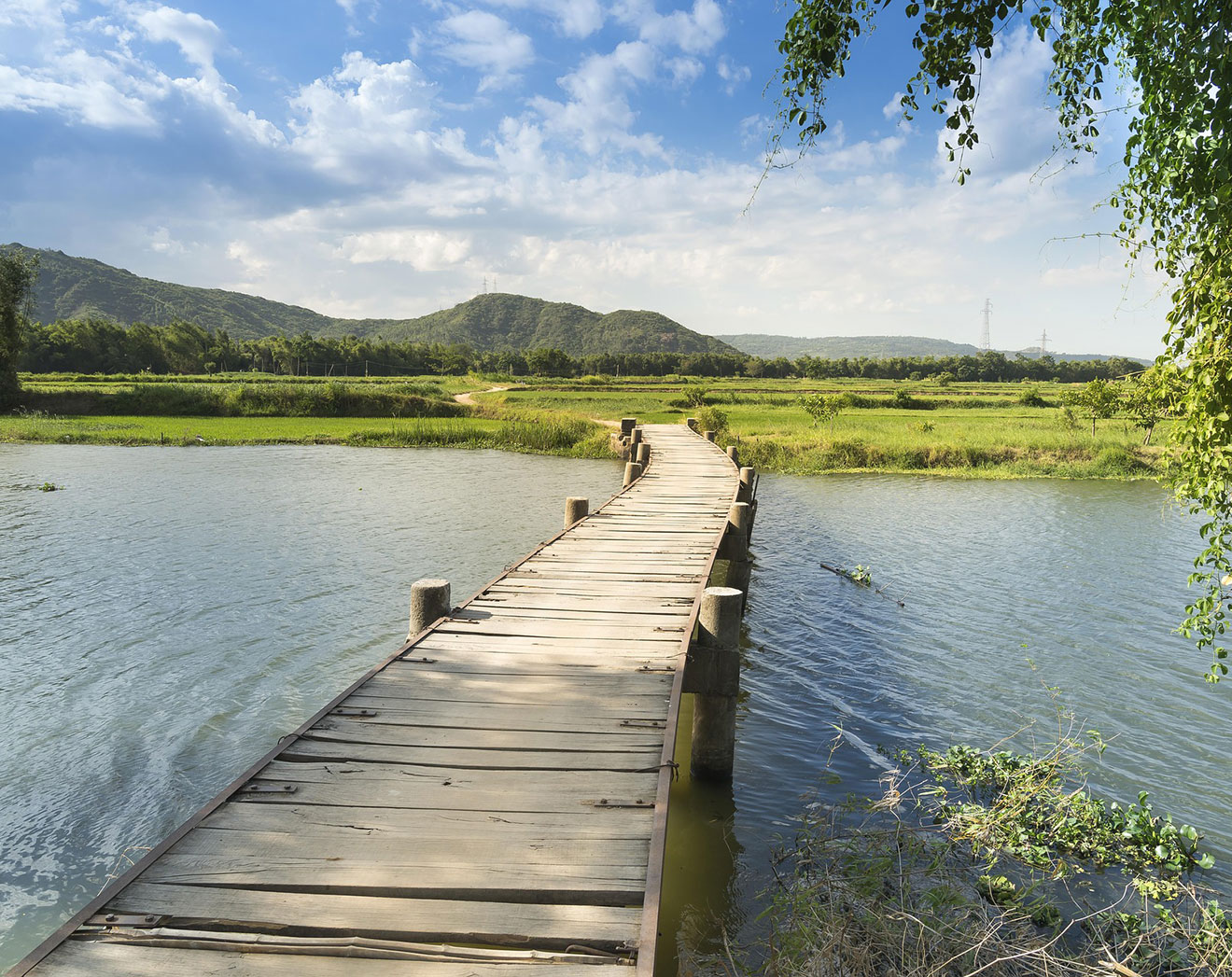
It begins on the road south from Hanoi, where the traffic thins and the scent of the countryside takes over. The motorbike hums beneath you, steady and sure, as rice fields stretch out on both sides like mirrors catching the sky. Every few kilometres, a new village appears — someone frying breakfast, someone fixing a tyre, a child waving from the shade. It’s the kind of ride that reminds you why you travel at all: freedom with a purpose, curiosity in motion.
Few travellers end up here by accident. Fewer still understand what they’ve found.
Information online remains sketchy and occasionally wrong; Google Maps will have you looping in circles through villages that don’t know your language. But that’s precisely the charm. Ninh Binh rewards those who arrive unhurried, map in one hand, curiosity in the other. Organised tours rush through in convoys of buses, clicking photos and fleeing. But the soul of this place needs time—preferably the two languid, exploratory days that this itinerary allows.
The Road into Ninh Binh
The train slows, and the horizon begins to ripple. The towers of Hanoi fade behind you, replaced by fields stitched with water and the occasional buffalo standing perfectly still, as if posing for a forgotten painting. The closer you get, the quieter it becomes—until all you hear is the hum of your motorbike and the thin whistle of the wind.
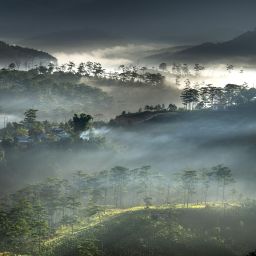
Ninh Binh does not announce itself. It appears in fragments: a limestone ridge here, a sudden glint of river there, a child waving from a doorway with a grin that could undo even the hardest city heart. Roads thread through tiny villages where every storefront seems to sell both noodles and miracles. You’ll pass women balancing trays of fruit on bicycles, roosters arguing with the sunrise, and the kind of mist that makes you feel you’ve slipped into a dream that forgot to end.
By the time you reach the first bend of the Trang An valley, you realise it’s not a landscape to be seen—it’s one to be entered. Slowly.
Day 1 — Of Rivers and Dynasties
The best way to move in Ninh Binh is astride a motorbike, wind in your hair and the faint smell of wet earth around you. The distances between sights are generous, and the road itself becomes part of the journey.
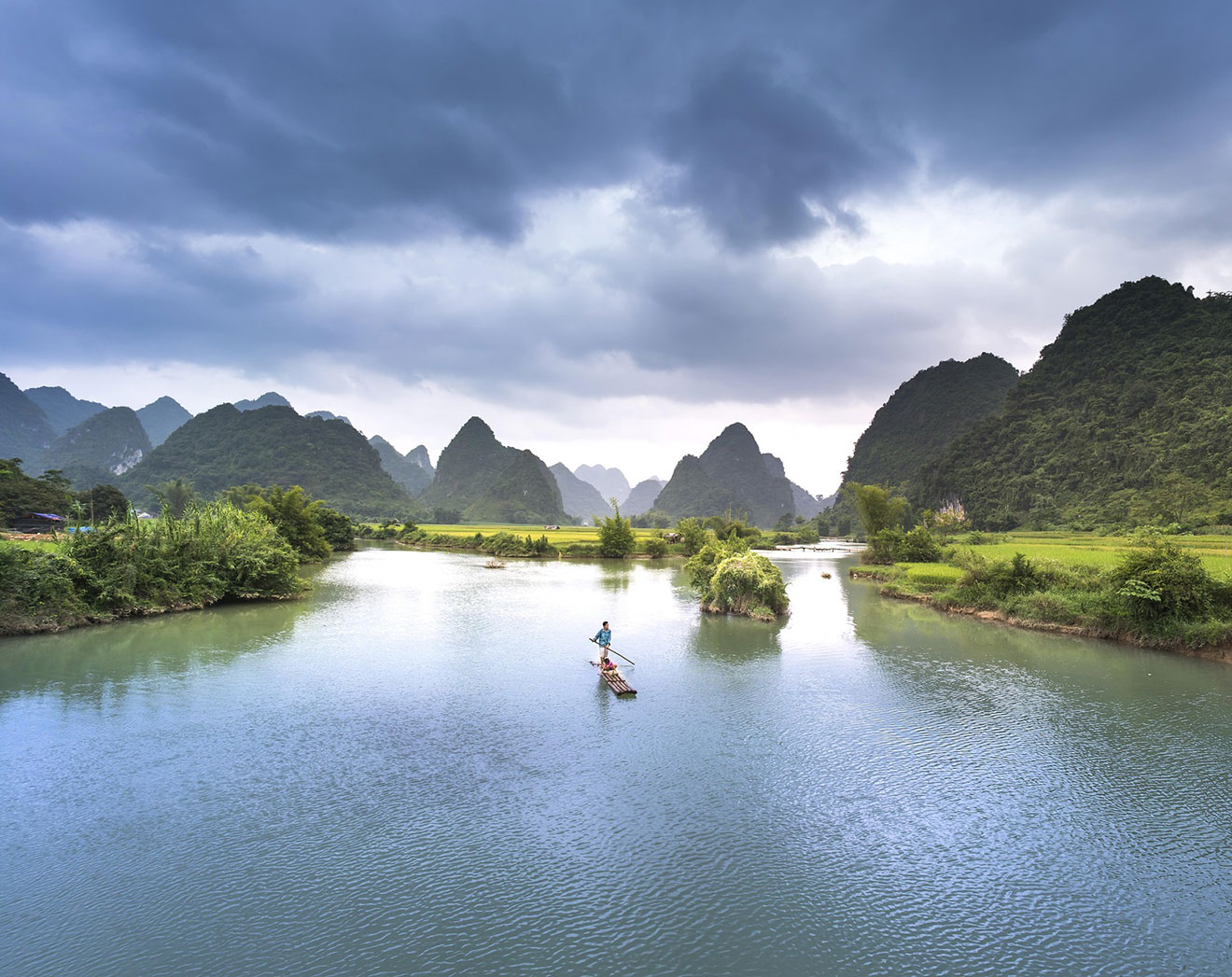
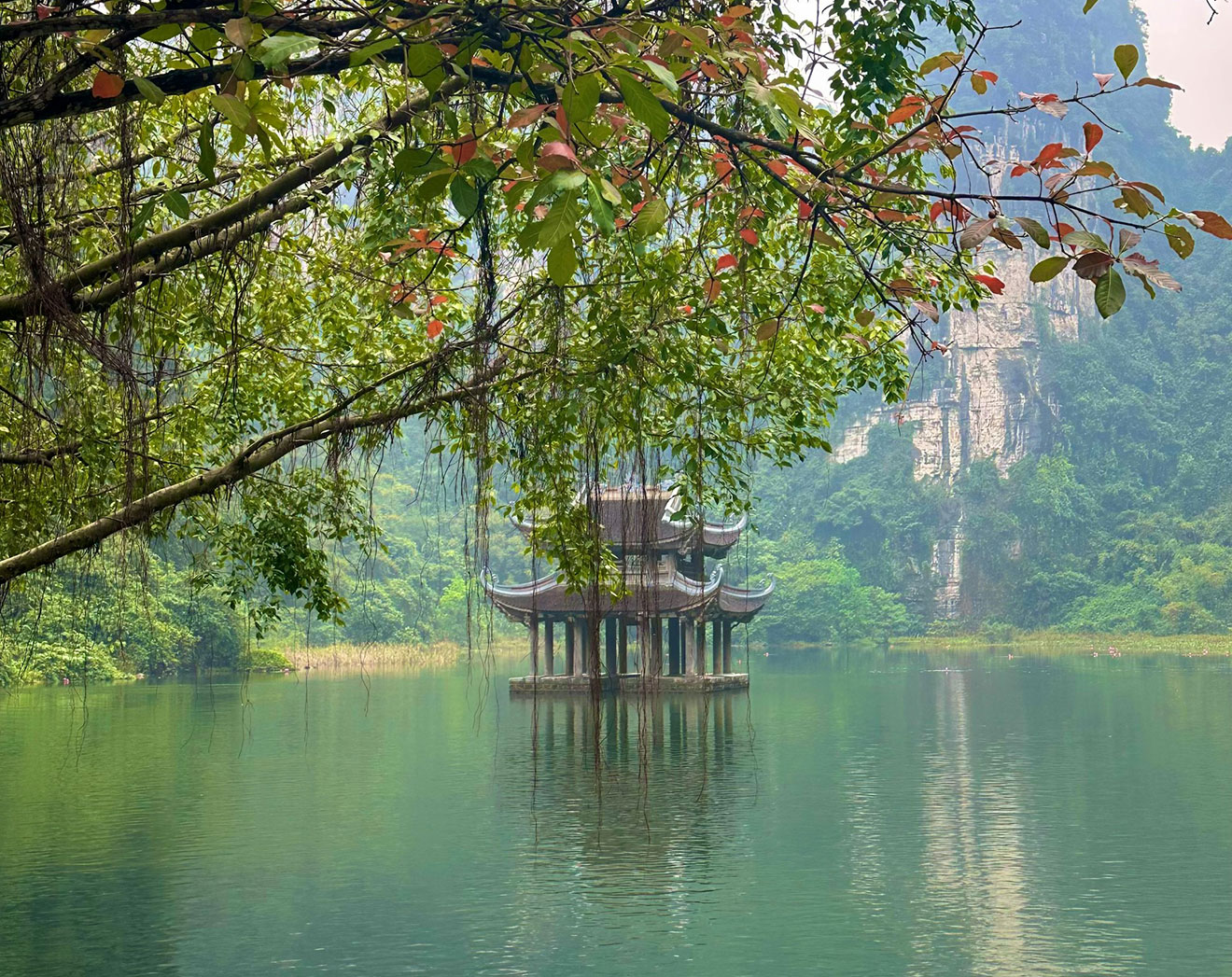
Trang An comes first, the undeniable heart of the province. A UNESCO World Heritage Site, it’s a labyrinth of limestone karsts draped in forest and threaded by green water. You board a small wooden boat, rowed by a woman whose arms could outlast the river. The technique is hypnotic: she rows with her feet, guiding you through caves so low you duck and laugh in disbelief. Two hours glide by in near silence, the echo of dripping water and the steady rhythm of oars. Trang An is serenity turned tangible—the kind that makes you forget to take photos until it’s too late.
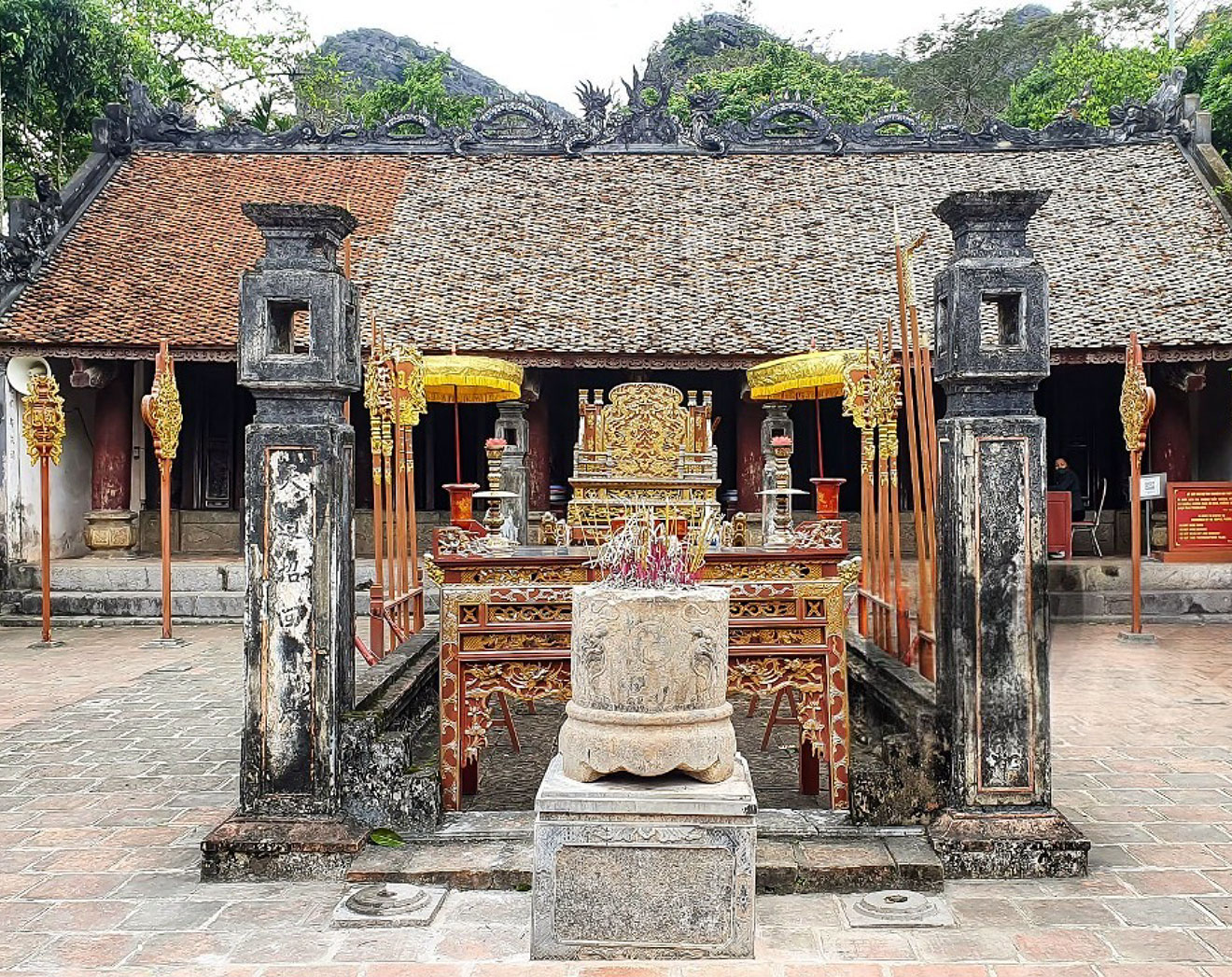
Not far away lies Hoa Lu, once the capital of Vietnam in the 10th century, when the Dinh and Le dynasties ruled these misted valleys. Today, the ruins are quiet, their temples housing statues of emperors who stare back with the calm of a millennium. What remains is less about walls and more about atmosphere—the sense that power once pulsed here, beneath the mountains now reclaiming their kingdom.
Then comes Bai Dinh Pagoda, vast and improbably grand. Everything here is supersized: five thousand Buddha statues, a bell heavier than a lorry, temples that gleam like new coins. Visitors drift about on electric shuttles, yet the scale doesn’t quite erase the solemnity. Climb high enough and the view opens across the province—a sprawl of fields and haze that reminds you how little the world has changed beyond the temple gates. Somehow, despite its enormity, Bai Dinh remains curiously under-visited. Perhaps because awe, in such quantities, can be exhausting.
… Ninh Binh doesn’t perform for you—it lets you in, slowly, until you forget you were ever a visitor.
Day 2 — The Quiet Roads of Tam Coc
If Day 1 was about monuments, Day 2 belongs to the countryside. Here, a bicycle suffices—slow travel for a slower landscape.
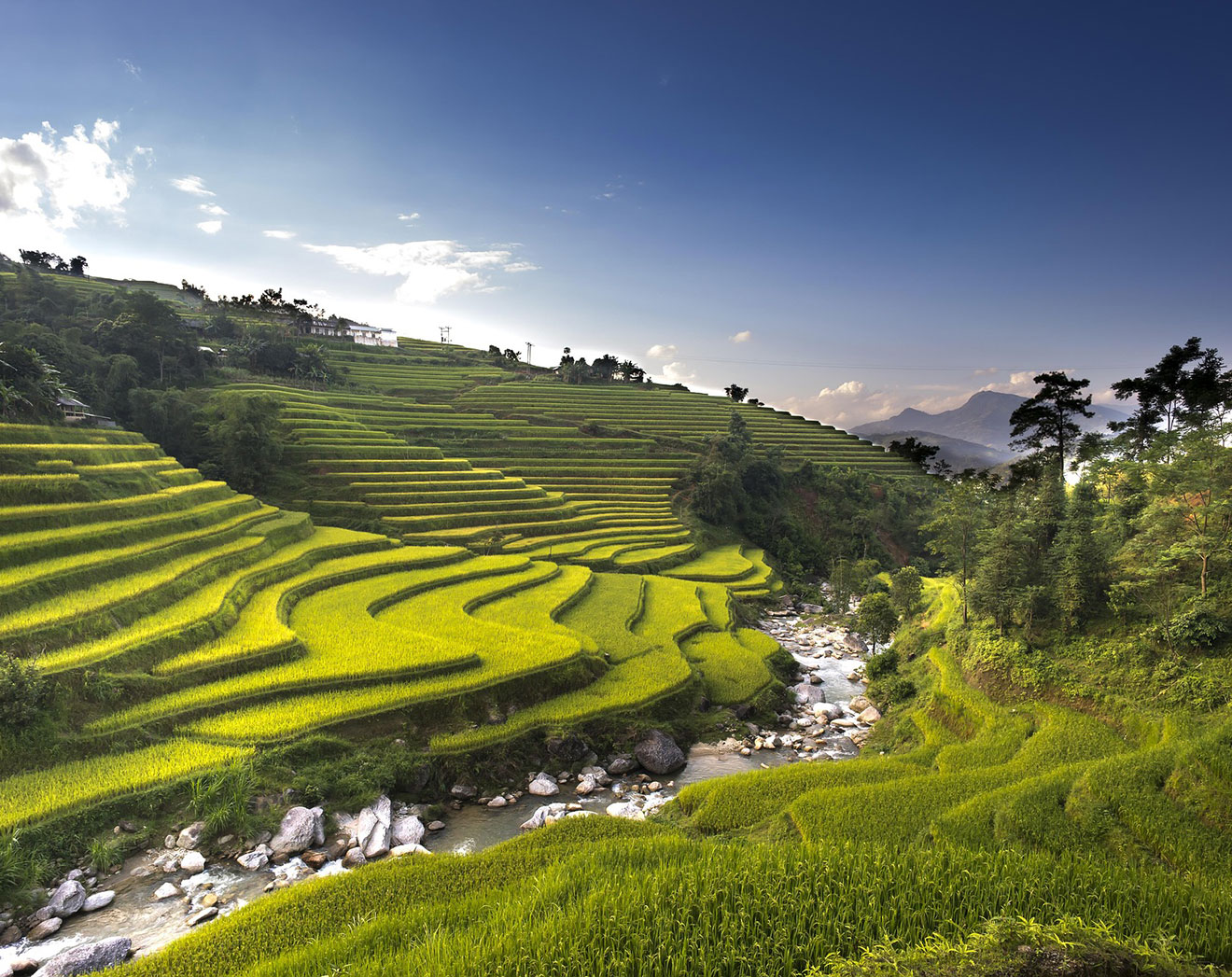
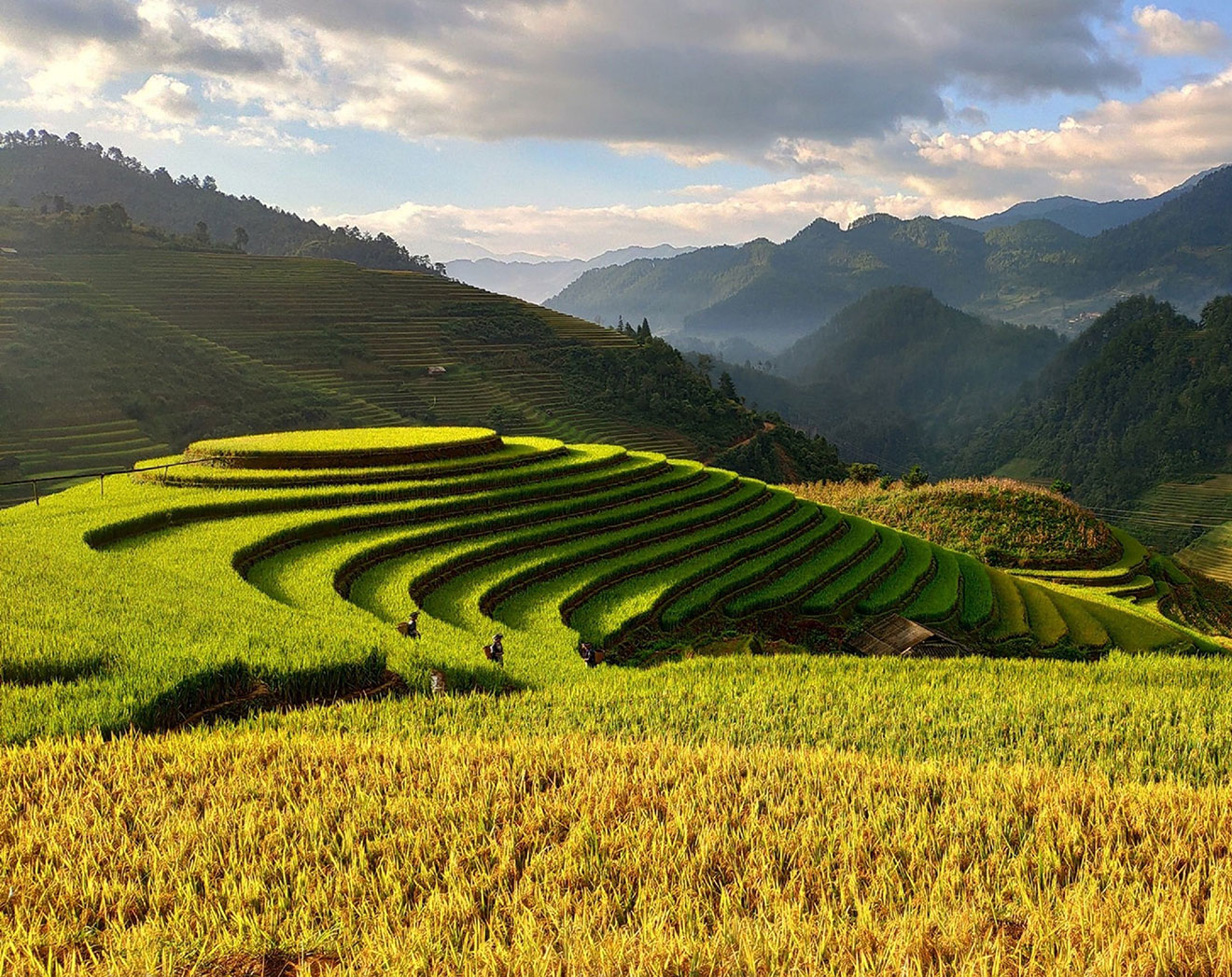
Tam Coc’s rice fields spread like mirrors beneath the karsts. Most travellers come for the boat ride, but fame has its price. The rowers, entrepreneurial to a fault, often demand mid-river tips or insist you buy them snacks on return. Skip the performance and take to the road instead. Pedal between paddies, wave at farmers bent over their crops, and let the horizon move with you. From this angle, Ninh Binh feels uncurated and infinite.
Follow the lane toward Bich Dong Pagoda, where three small temples cling to a mountainside. The approach alone is worth it: rice fields glinting under limestone cliffs, an image that insists on a pause. Inside, stairs wind upward through caves dim enough to make you feel slightly heroic. Buddhist carvings glow in candlelight; stalactites hum when struck. During the Indochina War, the Viet Minh hid here—proof that even serenity once sheltered rebellion.
By midday, turn toward Hang Mua. The so-called “caves” are unimpressive, but the climb above them is not: five hundred uneven stone steps leading to a temple on the peak. You’ll curse halfway up, but at the top, the world opens into 360 degrees of green. Tam Coc lies below, rivers threading through fields, clouds resting on karsts like stray thoughts. The view is so complete it feels like standing inside a painting.
And then, if you still have energy—or curiosity unspent—head to Thung Nham Bird Park, a place so absent from guidebooks it feels like a secret whispered from one traveller to another. I ended up there thanks to a hotel receptionist named Trang, who offered to guide us herself. At dusk, the boats drift through mangrove waters while hundreds of birds gather in the trees. The only sound is the rustle of wings and the soft thud of oars. The sun slips behind the cliffs, and for a moment, Ninh Binh becomes a memory even before it ends.
Nights Beneath the Limestone
The spirit mediums—tang-ki, as they are called—are where the festival sheds its elegance and becomes something raw, almost unsettling. I had read about possession before, but witnessing it at Si Thian Kong was another matter entirely. It begins quietly enough: a man seated before the altar, eyes half-closed, the smell of sandalwood thick in the air. Then, something shifts. The drumming quickens, his shoulders tighten, and suddenly the body that sat so still moves with astonishing force—as if inhabited by a new intelligence. The devotees call it the descent of the gods. To an outsider, it looks like a collision between ecstasy and control.
I watched one tang-ki drive a steel skewer through his cheek without flinching. Another danced barefoot across blades. None of it felt theatrical. There was precision in their madness, a method to what might otherwise seem barbaric. The priests surrounded them not as handlers but as interpreters, murmuring prayers, fanning incense, keeping the rhythm alive. Each gesture felt rehearsed by centuries, each cut a continuation of something older than the town itself.
Part of me wanted to look away; another part wanted to understand what drove these men to become vessels for something invisible. Perhaps it was faith. Perhaps it was an ancient language of pain—one that speaks where words fail. When the trance lifted, the tang-ki appeared drained but lucid, as though nothing extraordinary had happened. He drank water, nodded politely, and walked away. The performance ended, yet the image lingered—a reminder that reason, for all its brilliance, sometimes sits quietly at the edge of mystery.
…Here, silence isn’t the absence of sound; it’s the language the countryside still speaks fluently.
Where to Stay
Skip Ninh Binh city—it’s concrete and convenient without charm. Stay instead in Tam Coc, where mornings begin with mist on the paddies and roosters that don’t care it’s your holiday. Accommodation ranges from lakeside bungalows to family-run homestays; choose one just outside town for the kind of quiet that money can’t buy.
The Art of Staying Longer
My trip took three and a half days, two nights, back in the cool light of December, though I could have lingered for twice as long. This itinerary isn’t designed for those racing from sight to sight. It’s for travellers who prefer to drift, to let the scenery unfold rather than be conquered.
Bring a motorbike, or at least a willingness to get lost. Allow Ninh Binh to work at its own tempo—the river pace, the bird-call rhythm, the lull of rain on the pagoda roofs.
If you do, you’ll discover what most miss: that Vietnam’s quiet heart still beats in places the map barely marks. And once you’ve heard it, you’ll never quite forget the sound.
Read More: Cormorant fishing and Trang An
Think your friends would be interested? Like, share and subscribe!